01 · Foundation420
Common Foundation
Shared digital, creative, historical and AI competencies.
One-Year CIE Programme · Integrated Capstone · Stage 03
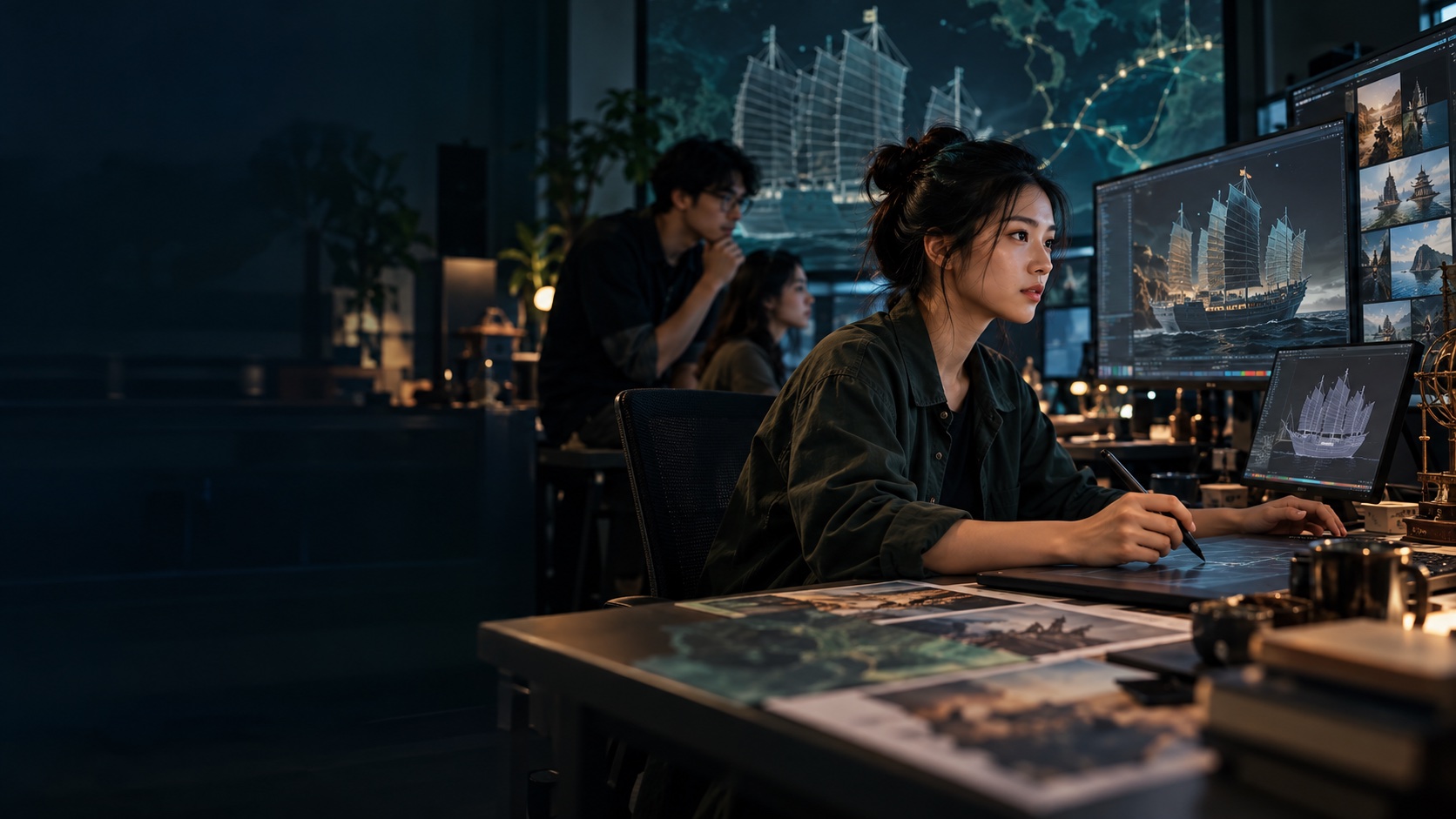
Bring animation, AI systems, education and strategic communication together in one controlled Zheng He transmedia project.
Guided production learning
One connected project
Studio-based delivery
Gates and viva periods
Why the Zheng He capstone?
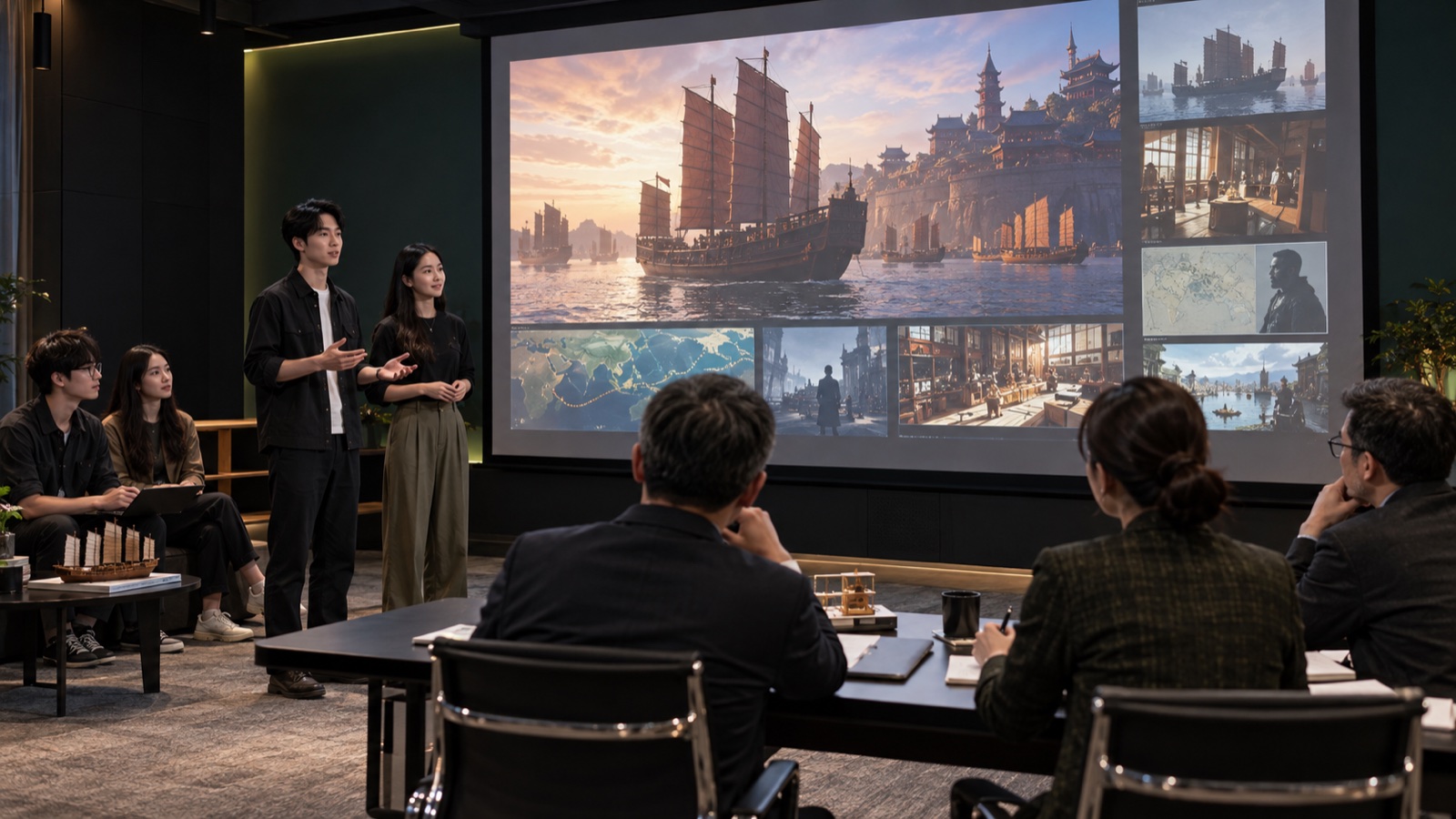
After the Common Foundation and one major specialisation, you join a cross-disciplinary team and turn an approved creative brief into coordinated animation, AI, learning and public-communication outputs.
The challenge is larger than making an attractive image or working prototype. You must justify the history, manage dependencies, document AI use, clear rights, collaborate across majors and preserve a releasable project.


One continuous learning journey
The 420-hour foundation creates a common language. The 600-hour major develops occupational depth. The capstone reconnects the disciplines through evidence-based production.
Shared digital, creative, historical and AI competencies.
Advanced capability in one professional discipline.
Integrated, controlled and assessable production.
Purpose
Six practical expectations connect the formal outcomes to the way a real multidisciplinary production operates.
Interpret a commission, define measurable success, identify audiences and map a coordinated deliverable tree.
Validate research, maintain a controlled Zheng He canon, verify rights and handle cultural interpretation responsibly.
Maintain identifiers, records, versions, schedules, quality reviews and accountable approvals.
Test handovers connecting scenes, AI workflows, learning resources and communication materials.
Correct failures, evidence human oversight, complete final checks and archive approved outputs.
Maintain an authentic contribution portfolio and defend creative, technical and ethical decisions in a viva.
Controlled teaching structure
The structure combines 66 studio sessions of 210 minutes (231 hours) with three formal gate or viva periods of 180 minutes (9 hours).
 CAP-01 · 45h
Research, rights, roles and production controls.
Explore module ↓ CAP-02 · 45h
Test the integrated workflow before production.
Explore module ↓ CAP-03 · 105h
Build, integrate, review and refine together.
Explore module ↓ CAP-04 · 45h
Release responsibly and defend your work.
Explore module ↓Detailed module activities
Each stage produces controlled evidence for the next gate, sprint or release decision.
Design the governed project and secure an approved baseline.
Outcome: an approved shared brief and production system ready for prototyping.
Prove the pipeline before authorising full production.
Outcome: a verified integrated prototype and approved production backlog.
Build, integrate, review and correct production outputs.
Outcome: production-ready outputs, auditable reviews and corrected near-final release packages.
Release responsibly and defend your contribution.
Outcome: a controlled release, verified archive and assessed individual competency.
One commission · Four professional roles
A shared canon, production register and approval process connect the four disciplines. Each major owns distinct deliverables and must complete tested handovers.
Assets, layout, previs, animation and real-time presentation with documented publishing and colour-managed delivery.
Output: approved sequences and assets
Controlled generation and knowledge systems with prompt, model, data, evaluation, reproducibility and human-review records.
Output: audited AI workflow
Learning activities, public education, facilitator guidance, accessibility, learner assessment and comprehension evidence.
Output: validated learning package
Audience strategy, rights-cleared content, releases, partnerships, AI disclosures and measurable response.
Output: launch and analytics package
Measurable outcomes
A polished team result is not enough. Your evidence must show what was made, how decisions were controlled, what was tested, who approved release and what you personally contributed.
Competency assessment
Assessment follows the production journey from definition and validation through delivery, release and individual defence.
No. Animation, AI, Education and Marketing students contribute distinct deliverables to the same approved project.
No. Those foundations are prerequisites. Capstone hours focus on integrating and validating production work.
No. Every student maintains personal evidence and must defend their decisions in a formal viva.
Yes, when authorised and traceable. Models, sources, prompts, evaluation, human changes and approvals must be documented.
No. Release requires explicit quality, rights, AI, canon and archive clearance.
Your final transition
Finish with verifiable artefacts, documented decisions and a professional account of your own work.